
Best Flooring for Bathrooms
Last updated: March 2026 — Based on current UK flooring industry guidance.
Choosing the best flooring for a bathroom requires careful consideration of water resistance, durability and ease of cleaning. Bathrooms are exposed to regular moisture, humidity and occasional splashes, so flooring needs to perform well in damp conditions.
Below are answers to common questions about bathroom flooring, including which materials are suitable and which options may be less practical.
Bathroom Flooring at a Glance
Bathrooms require flooring that can cope with high humidity and regular water exposure. Waterproof or highly water-resistant materials usually perform best in these environments.
Key facts about bathroom flooring:
- Waterproof flooring is usually the most practical choice
- Moisture resistance is important in humid environments
- Easy cleaning helps maintain hygiene
- Many modern bathroom floors are compatible with underfloor heating
- Popular options include LVT and water-resistant laminate flooring
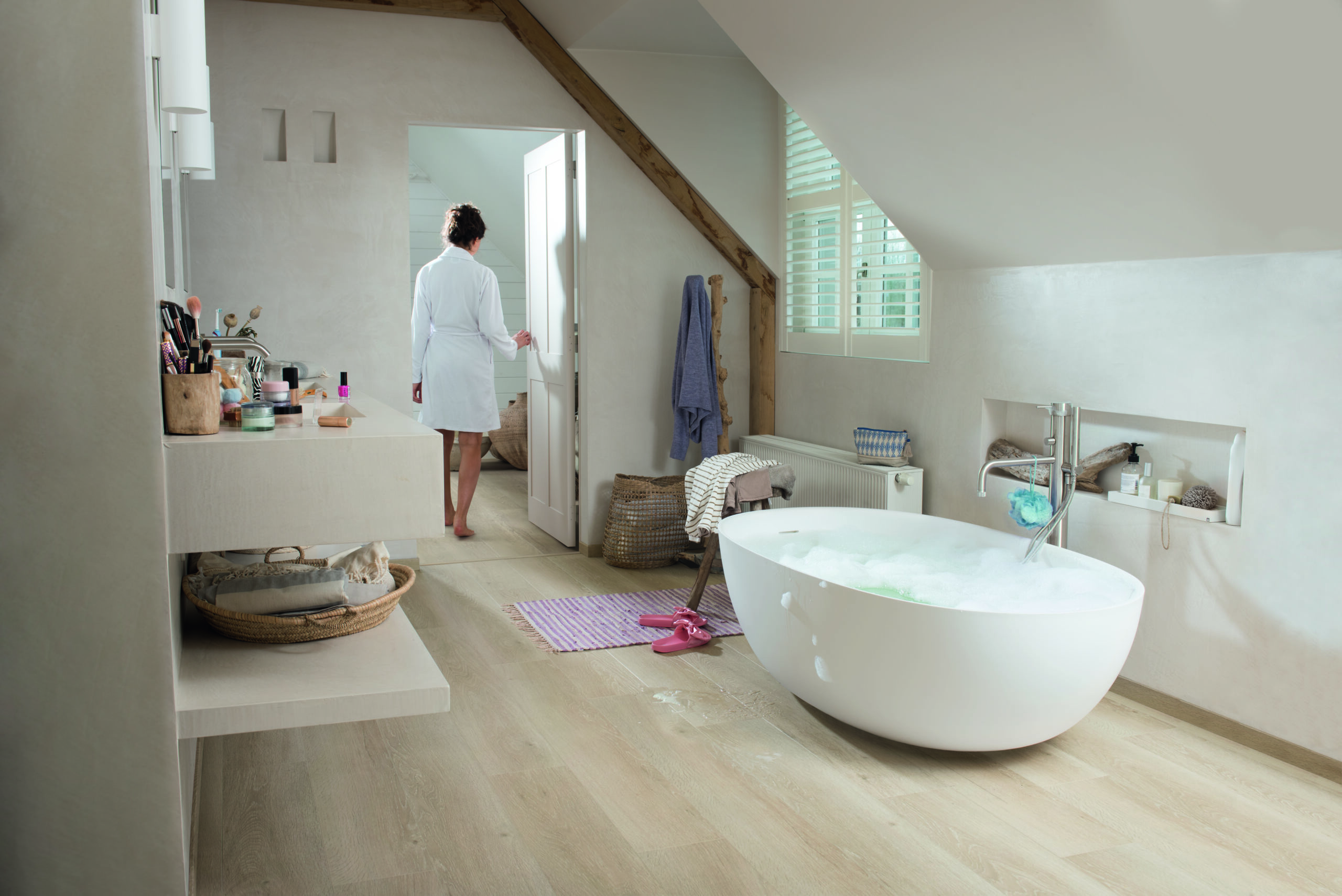
Bathroom Flooring Questions Covered in This Guide
The best flooring for bathrooms is typically a waterproof material that can cope with frequent moisture and humidity. Many homeowners choose LVT flooring because it is fully waterproof and designed for environments where water exposure is common.
Luxury vinyl tile (LVT) is often considered one of the most practical flooring options for bathrooms because it combines water resistance with durability and easy maintenance.
Laminate flooring can sometimes be used in bathrooms if the product is designed to be water resistant and installed correctly. Many modern laminate floors feature improved joint systems that help reduce moisture penetration.
However, laminate flooring is not fully waterproof, so prolonged water exposure should still be avoided.
LVT flooring is widely regarded as one of the best flooring choices for bathrooms. It is completely waterproof and designed to perform well in environments where spills and moisture are common.
Many LVT designs also replicate the appearance of wood or stone, allowing homeowners to achieve a stylish bathroom floor without the maintenance concerns associated with natural materials.
Engineered wood flooring is generally not recommended for bathrooms because the high humidity and regular moisture exposure can affect the wood layers over time.
While engineered wood is more stable than solid wood, it is still a natural timber product and may be affected by prolonged exposure to water.
Solid wood flooring is usually not recommended for bathrooms. Natural timber expands and contracts with changes in humidity, and frequent moisture exposure can cause swelling, warping or gaps between boards.
For this reason, waterproof flooring options are typically a better choice for bathroom environments.
Flooring materials that are sensitive to moisture may not perform well in bathrooms. Solid wood flooring and many traditional timber floors can be affected by high humidity and frequent water exposure.
Choosing a waterproof flooring option can help improve durability and reduce maintenance requirements.
Waterproof flooring is usually the most practical choice for bathrooms because it can cope with regular splashes and moisture. Vinyl flooring products such as LVT are designed specifically for environments where water exposure is common.
This makes waterproof flooring particularly popular for modern bathroom renovations.
Neutral tones remain among the most popular choices for bathroom flooring. Light oak, grey and stone-effect finishes are commonly used because they complement a wide range of bathroom styles.
Lighter colours can also help bathrooms appear brighter and more spacious.
Many modern flooring products are compatible with underfloor heating systems when installed according to manufacturer guidelines. LVT flooring is often considered a suitable option for underfloor heating because it transfers heat efficiently.
Always check the manufacturer’s recommendations before installation.
Bathroom flooring is available from DIY retailers, home improvement stores and specialist flooring suppliers across the UK. Many homeowners choose specialist flooring retailers because they often provide a wider range of flooring products and more detailed guidance.
Examples of retailers selling bathroom flooring in the UK include:
Wood Flooring Kent
Wickes
B&Q
Homebase
Ordering flooring samples can help you compare colours and finishes before making a final decision. If you already know the style you are looking for, you can browse our flooring ranges online.↑ Back to questions
Industry Standards and Guidance
Information in this guide reflects commonly accepted guidance on engineered wood flooring construction, installation and maintenance used throughout the flooring industry. Reference material includes resources from organisations such as:
- National Wood Flooring Association (NWFA)
- British Woodworking Federation (BWF)
- Vinyl Plus – European PVC industry sustainability programme
- Flooring manufacturer installation guidelines
These organisations publish technical information on wood flooring behaviour, stability and installation practices.
About Wood Flooring Kent
Wood Flooring Kent is a UK flooring retailer specialising in laminate flooring, engineered wood flooring and luxury vinyl tile (LVT). The company offers a wide range of hard flooring products with nationwide delivery across the United Kingdom.
Customers can also order flooring samples to compare colours and finishes at home before placing a full order.