
Solid Wood Flooring Questions & Answers
Last updated: March 2026 — Based on current UK flooring industry guidance.
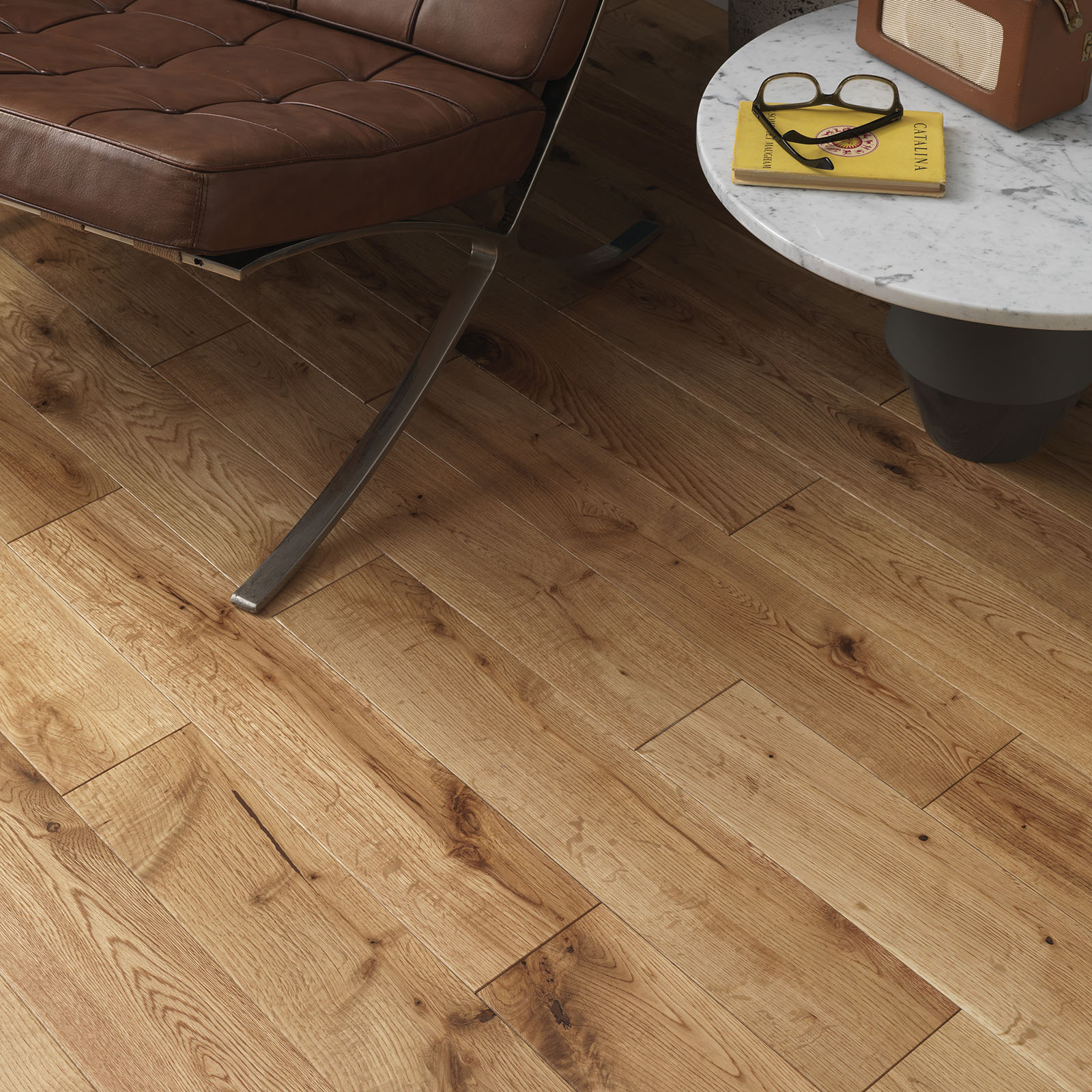
Solid wood flooring is a traditional real wood flooring option valued for its natural character, long lifespan and timeless appearance. Each board is made from a single piece of timber, which means it can often be sanded and refinished multiple times over the years.
Below are answers to some of the most common questions people ask when choosing solid wood flooring, including lifespan, maintenance, thickness and underfloor heating.
Solid Wood Flooring at a Glance
Solid wood flooring is made from a single piece of natural timber all the way through each board. It offers a classic real wood appearance and can often be sanded and refinished multiple times during its lifespan.
Key facts about solid wood flooring:
- Solid wood flooring is made from 100% real timber
- It can often be sanded and refinished multiple times
- It is generally less stable than engineered wood flooring
- It is best suited to living rooms, bedrooms and hallways
- It is usually not recommended for most underfloor heating systems
Solid Wood Flooring Questions Covered in This Guide
What is solid wood flooring?
What is solid wood flooring made of?
How long does solid wood flooring last?
Is solid wood flooring waterproof?
Is solid wood flooring suitable for kitchens?
Can solid wood flooring be used in bathrooms?
Is solid wood flooring good for pets?
Does solid wood flooring scratch easily?
What thickness solid wood flooring should I choose?
Can solid wood flooring be sanded?
Can solid wood flooring be installed over tiles?
Can solid wood flooring be installed over underfloor heating?
Is solid wood flooring noisy?
Does solid wood flooring fade in sunlight?
What colour solid wood flooring is most popular?
Where can you buy solid wood flooring in the UK?
Solid wood flooring is a real wood flooring product made from a single piece of timber throughout each board. Unlike engineered wood flooring, it does not contain layered core materials beneath the surface.
This gives solid wood flooring a natural appearance and allows it to be sanded and refinished multiple times over its lifespan.
Solid wood flooring is made entirely from natural hardwood or softwood timber. Each plank is cut from a single piece of wood and then machined to create the required profile and joint system.
Common wood species used for solid wood flooring include oak, walnut, pine and other natural timbers.
Solid wood flooring can last for several decades and, in many cases, more than 50 years if it is properly maintained. Its long lifespan is one of the main reasons homeowners choose real wood flooring.
Because the boards are made from solid timber throughout, they can often be sanded and refinished multiple times.
Solid wood flooring is not waterproof and should be protected from excessive moisture. Natural timber expands and contracts as humidity levels change, which means standing water can cause damage over time.
For this reason, solid wood flooring is usually better suited to drier living areas than moisture-prone rooms.
Solid wood flooring can be used in kitchens, but it requires careful maintenance and prompt cleaning of spills. Because kitchens experience changing humidity and occasional water exposure, solid wood may move more than engineered wood flooring.
Many homeowners choose engineered wood or LVT instead for a more practical kitchen floor.
Solid wood flooring is generally not recommended for bathrooms because of the high moisture and humidity levels in these rooms. Repeated water exposure can cause swelling, warping and long-term damage.
Waterproof flooring such as LVT is usually a better option for bathrooms.
Solid wood flooring can work in homes with pets, but it may show scratches and wear over time depending on the wood species and finish used. Harder wood species and durable finishes tend to perform better.
Keeping pets’ nails trimmed and using rugs in high-traffic areas can help reduce wear.
Solid wood flooring can scratch in the same way as other real wood floors, although the level of resistance depends on the wood species and finish. Softer woods are generally more prone to dents and scratches than harder woods such as oak.
Using felt pads under furniture and cleaning away grit regularly can help minimise surface damage.
Solid wood flooring is available in a range of thicknesses depending on the product and installation method.
Common solid wood flooring thicknesses include:
14–15mm – common residential solid wood boards
18–20mm – thicker solid wood flooring with a more traditional feel
20mm+ – premium or structural solid wood boards
Thicker boards can often be sanded more times during their lifespan.
Yes, solid wood flooring can usually be sanded and refinished multiple times because each board is made from solid timber throughout. This is one of the biggest advantages of solid wood flooring compared with many other floor types.
The number of times it can be sanded depends on the board thickness and condition.↑ Back to questions
Solid wood flooring can sometimes be installed over tiles if the surface is level and stable, but installation requirements will depend on the fixing method being used. In many cases, preparation work may be needed first.
Uneven tiles or deep grout lines may need to be addressed before installation.
Solid wood flooring is usually not recommended for most underfloor heating systems because natural timber expands and contracts more significantly with temperature changes. This movement can increase the risk of gaps, warping or instability.
Engineered wood flooring is generally considered a more suitable real wood option for underfloor heating.
Solid wood flooring can produce some sound underfoot, particularly if installed as a floating floor or in rooms with limited soft furnishings. The level of noise will also depend on the subfloor and installation method.
Using suitable underlay where appropriate and adding rugs can help reduce sound.
Like all natural wood products, solid wood flooring may gradually change colour when exposed to sunlight over time. Some species darken, while others may lighten slightly depending on the finish and exposure.
Using blinds or curtains can help reduce prolonged UV exposure.
Oak remains one of the most popular choices for solid wood flooring because it offers a natural, versatile appearance that suits many interiors. Light oak, natural oak and medium oak tones are especially common.
Neutral wood tones tend to remain popular because they work well with both traditional and modern décor.
Solid wood flooring is available from DIY retailers, home improvement stores and specialist flooring suppliers across the UK. Many homeowners choose specialist flooring retailers because they often provide a wider choice of wood species, finishes and board sizes.
Examples of retailers selling solid wood flooring in the UK include:
Wood Flooring Kent
Wickes
B&Q
Homebase
Ordering flooring samples can help you compare colours and finishes before making a final decision. If you already know the look you’re after, you can browse our solid wood flooring ranges online.↑ Back to questions
Industry Standards and Guidance
Information in this guide reflects commonly accepted guidance on solid wood flooring installation, maintenance and long-term performance. Reference material includes publications and technical resources from organisations such as:
- National Wood Flooring Association (NWFA)
- British Woodworking Federation (BWF)
- European timber industry organisations and manufacturer documentation
- Solid wood flooring manufacturer installation guidelines
These sources provide guidance on timber behaviour, sanding and refinishing practices, and wood floor maintenance.
About Wood Flooring Kent
Wood Flooring Kent is a UK flooring retailer specialising in laminate flooring, engineered wood flooring and luxury vinyl tile (LVT). The company offers a wide range of hard flooring products with nationwide delivery across the United Kingdom.
Customers can also order flooring samples to compare colours and finishes at home before placing a full order.